"Can the BRI Deliver High-Quality Development?" - by CWP alum Min Ye
The Belt and Road Initiative (BRI) has evolved from its ambitious beginning into a framework focused on high-quality development (HQD), emphasizing environmental sustainability and people-centered development. This study examines to what extent these new directives are implemented in the context of China’s overseas economic zones (OEZs), employing a multi-actor-influence model to analyze the complex interactions and challenges inherent in these projects. Focusing on the Vientiane Saysettha Development Zone (VSDZ) in Laos, our analysis identifies three primary institutional challenges: fragmentation between the central and local governments in China, structural constraints imposed on Chinese businesses, and inadequate cooperation between Chinese and host country actors. These challenges underscore the complexities of translating Beijing’s top-down policy into effective action on the ground. The paper concludes with a discussion of the broader implications of these findings for the BRI’s future development.
Can the BRI Deliver High-Quality Development? A Multi-Actor Analysis of China’s Overseas Economic Zones - Zeying Wua Lingnan University, Hong Kong, PRC https://orcid.org/0000-0003-3371-4504 & Min YePublished online: 18 Jul 2024 - https://doi.org/10.1080/10670564.2024.2379463
Min Ye is a Professor of International Relations at the Pardee School of Global Studies at Boston University. Her research situates in the nexus between domestic and global politics and the intersection of economics and security, with a focus on China, India, and regional relations.
Her publications include The Belt, Road and Beyond: State-Mobilized Globalization in China 1998 — 2018 (Cambridge University Press, 2020), Diasporas and Foreign Direct Investment in China and India (Cambridge University Press, 2014), and The Making of Northeast Asia (with Kent Calder, Stanford University Press, 2010). Among her journal articles, there are “Adapting or Atrophying: China’s Belt and Road after the Covid Pandemic,” (Asia Policy 24.1 2021), “Thucydides’s Trap, Clash of Civilizations or Divided Peace? Great Power Politics from TPP to BRI to FOIP” (JPWS 2, 2020); “Fragmentation and Mobilization: Domestic Politics of China’s Belt and Road Initiative” (JCC 28.119, 2019); “The Utility and Conditions of Diffusion by Diasporas: Exploring Foreign Direct Investment in China and India” (JEAS 12.2, 2016); “China and Competing Cooperation in Asia Pacific: TPP, RCEP and the New Silk Road” (Asian Security 11.3, 2015). In addition, she has published policy briefs on China’s BRI, nationalism, economic planning, Asian regionalism, and China-India comparison, etc.
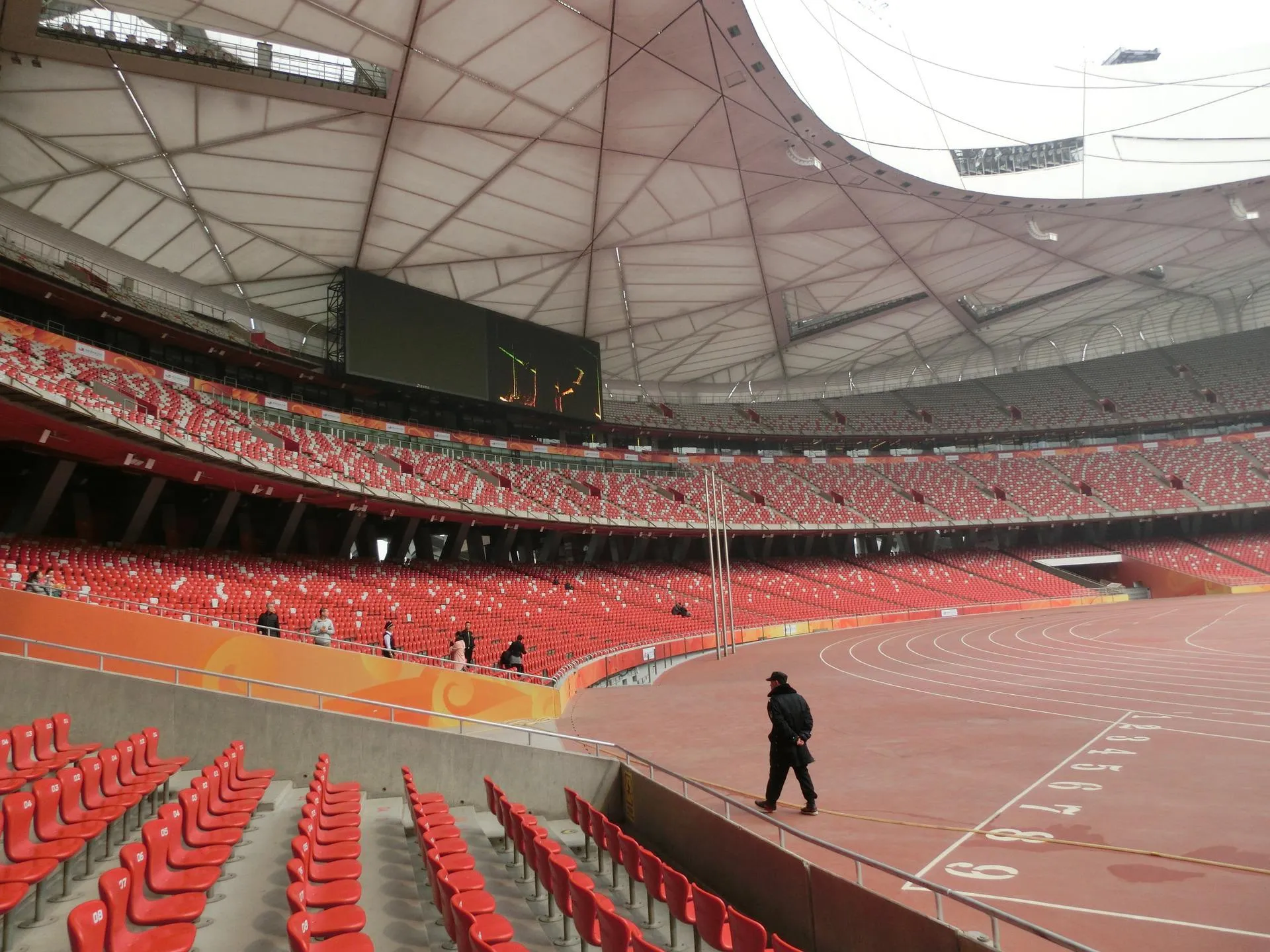
Photo Credit: https://pixabay.com/users/jensjunge-402508/