BRI Dialogues - D21 In Conversation With CWP Alum Prof Min Ye
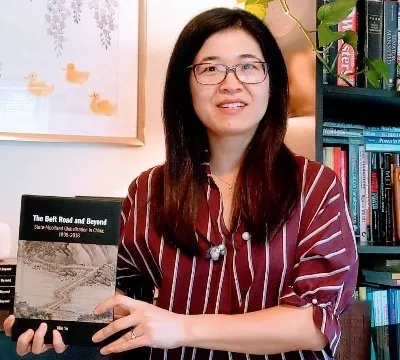
Joining us in BRI Dialogue 21 is Professor Min Ye @BeltBeyond a Core Faculty Member of the Global China Initiative at the Boston University Global Development Policy Center and an Associate Professor of International Relations and Political Science at the Frederick S. Pardee School of Global Studies at Boston University. @BU_Tweets This is one of the most intriguing BRI Dialogue episodes and one in which we have solely focused on the genesis, the metamorphosis and what China’s Belt Road Initiative will be evolving into on its 10th anniversary in 2023. Doing this through Min’s optics as one of the most renowned experts of this global initiative. Ye is also the author of The Belt, Road and Beyond: State-Mobilized Globalization in China 1998-2018, Diasporas and Foreign Direct Investment in China and India and The Making of Northeast Asia with Kent Calder. Her articles, “China’s Outbound Direct Investment: Regulation and Representation,” “Competing Cooperation in Asia Pacific: TPP, RCEP and the New Silk Road” and “Conditions and Utility of Diffusion by Diasporas” have appeared in Modern China Studies, Journal of Asian Security and Journal of East Asian Studies. Ye was the director of East Asian Studies programme from 2010-2014 and launched the new major in Asian Studies at Boston University. She also served as a visiting scholar at Fudan University, Zhejiang University and Chinese Academy of Social Sciences in China, as well as Rajiv Gandhi Foundation in India, Chinese University of Hong Kong and the National University of Singapore. In addition, she has consulted Chinese state-owned companies and private companies on outbound investment. Ye is a Public Intellectual Program fellow of the National Committee on the U.S-China Relations, 2014-2016. In 2013, she was the recipient of the East Asia Peace, Prosperity, and Governance fellowship. She was also the recipient of the 2006 Millennium Education scholarship in Japan and the multi-year Bradley scholarship at Princeton University. She received her PhD from Princeton University. The BRI Dialogues provide support and insights for senior executives and decision makers in both private and public sectors, on China and its BRI programme of activities. Our overriding aim is to establish a clearer appreciation of how to ‘COPE’ regarding China. COPE in BRI Dialogues means how to deal with Complexities, to capitalise on Opportunities, to understand her return to Power, and brace for the impact of Externalities of China. So here is D21 (Dialogue 21).
https://www.youtube.com/watch?v=zBpFaHRp3uA
Min Ye is Associate Professor of International Relations at the Pardee School of Global Studies at Boston University. Her research situates in the nexus between domestic and global politics and the intersection of economics and security, with a focus on China, India, and regional relations.
Her publications include The Belt, Road and Beyond: State-Mobilized Globalization in China 1998 — 2018 (Cambridge University Press, 2020), Diasporas and Foreign Direct Investment in China and India (Cambridge University Press, 2014), and The Making of Northeast Asia (with Kent Calder, Stanford University Press, 2010). Among her journal articles, there are “Adapting or Atrophying: China’s Belt and Road after the Covid Pandemic,” (Asia Policy 24.1 2021), “Thucydides’s Trap, Clash of Civilizations or Divided Peace? Great Power Politics from TPP to BRI to FOIP” (JPWS 2, 2020); “Fragmentation and Mobilization: Domestic Politics of China’s Belt and Road Initiative” (JCC 28.119, 2019); “The Utility and Conditions of Diffusion by Diasporas: Exploring Foreign Direct Investment in China and India” (JEAS 12.2, 2016); “China and Competing Cooperation in Asia Pacific: TPP, RCEP and the New Silk Road” (Asian Security 11.3, 2015). In addition, she has published policy briefs on China’s BRI, nationalism, economic planning, Asian regionalism, and China-India comparison, etc.
Min Ye has received grants and fellowship in the U.S and Asia, including a Smith Richardson Foundation grant (2016-2018), East Asia Peace, Prosperity, and Governance Fellowship (2013), Princeton-Harvard China and the World Program post-doctoral fellowship (2009-2010), and Millennium Education Scholarship in Japan (2006). In 2014-2016, the National Committee on the U.S-China Relations selects Min Ye as a Public Intellectual Program fellow. In 2020, Ye is selected as the Rosenberg Scholar of East Asian Studies at Suffolk University.
Professor Ye’s areas of expertise include Chinese political economy, China and India comparison, East Asian international relations, and globalization with focuses on transnational immigration and foreign investment.
Photo Credit: https://twitter.com/BeltBeyond/photo