"Balanced Connectivity Building in Infrastructure Cooperation: A Southeast Asian Perspective" - by CWP alum Cheng-Chwee Kuik
This paper was written in November 2024 prior to the inauguration of President Trump, and as such does not reflect or account for the changes that have occurred in the development space since then due to the second Trump administration's ongoing policies.
Introduction: The Imperative of Balanced Connectivity Building
While infrastructure building is an aspect of each country’s own national developmental effort, it may manifest into interstate cooperation when another country is involved in an infrastructure project’s initiation, financing, construction, and/or operation phases. Interstate infrastructure cooperation is especially common with big-ticket connectivity-building ventures. This essay offers a Southeast Asian perspective on how host countries in the region view foreign-backed infrastructure connectivity building and why some host countries are in a better position than others to pursue balanced connectivity building. It also provides a brief assessment of the roles of China and the United States in Southeast Asia’s quest for balanced connectivity building.
The term “balanced connectivity” was first coined by David Lampton et al. in their book Rivers of Iron: Railroads and Chinese Power in Southeast Asia, when they referred to the regional needs of having multiple major powers as partners in the construction of north-south and east-west connectivity in Southeast Asia.1 The present essay applies the term at the national level: “balanced connectivity building” is defined here as infrastructure building that involves multiple points of partnerships that are roughly equal, mutually beneficial, and potentially interdependent, rather than a single source of unequal, dominant, and overdependent ventures. The main argument is that if an interstate partnership is imbalanced, chances are it would be unsustainable in sociopolitical, financial, or ecological terms.
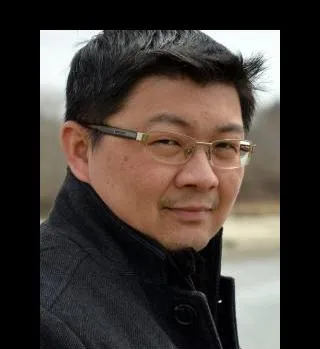
Dr. Kuik Cheng-Chwee is Professor of International Relations at the Institute of Malaysian and International Studies (IKMAS), National University of Malaysia (UKM). He is concurrently a Nonresident Senior Fellow at Johns Hopkins University’s Foreign Policy Institute (FPI) and a Nonresident Scholar at Carnegie China. Previously, he was a Postdoctoral Research Associate at the Princeton-Harvard “China and the World” (CWP) Program and a Visiting Research Fellow at Oxford University. Professor Kuik’s research focuses on smaller-state foreign and defence policies, Asian security, and international relations. Cheng-Chwee is a regular invited speaker to international conferences and closed-door policy roundtables. Cheng-Chwee’s publications have appeared in such peer-reviewed journals as International Affairs, Pacific Review, Journal of Chinese Political Science, Journal of Contemporary China, Chinese Journal of International Politics, Journal of Current Southeast Asian Affairs, and Contemporary Southeast Asia. His essay, “The Essence of Hedging”, won the Michael Leifer Memorial Prize awarded by the Institute of Southeast Asian Studies. He is co-author (with David Lampton and Selina Ho) of Rivers of Iron: Railroads and Chinese Power in Southeast Asia (2020) and co-editor (with Alice Ba and Sueo Sudo) of Institutionalizing East Asia (2016). His current projects include: hedging in international relations, domestic politics and foreign policy choices, and the geopolitics of connectivity cooperation. Cheng-Chwee serves on the editorial boards of Contemporary Southeast Asia, Australian Journal of International Affairs, Asian Politics and Policy, International Journal of Asian Studies, and East Asian Policy. He also served as Head of the Writing Team (2019-2020) for the Government of Malaysia’s inaugural Defence White Paper and a member of the Consultative Council on Foreign Policy, Malaysian Ministry of Foreign Affairs (2023). He holds an M.Litt. from the University of St. Andrews, and a PhD from the Johns Hopkins University’s School of Advanced International Studies. Cheng-Chwee can be contacted at [email protected].
Photo Credit: