"Assessing Hedging in Trump 2.0: The Case of Malaysian Neutrality" - by CWP alum Cheng-Chwee Kuik
- Malaysia’s decades-long neutrality position is quintessentially a hedging policy, an insurance-seeking policy aimed at mitigating risks by not taking sides, while diversifying partnerships with all powers and cultivating fallback measures.
- However, Malaysia’s Agreement on Reciprocal Trade with the United States, signed in October 2025, entails “poison pill provisions” that may enable Washington to unilaterally terminate that position and prevent Malaysia from forging close ties with China. Some observers have asserted that, amidst the intensifying US-China rivalry and growing big-power pressure, Malaysian neutrality and small-state hedging is no longer possible.
- Malaysian neutrality, as a typical form of small-state hedging, is active, inclusive and adaptive rather than passive, isolative and static. These longstanding features have played out with greater scope and scale under the Anwar Ibrahim administration. Anwar’s charisma has coloured Malaysia’s strategic neutrality, but the country’s diplomatic disposition derives from multiple factors beyond the leader—specifically, historical reasons, structural logic and domestic fundamentals.
- Although the intensifying US-China rivalry is heightening pressures on the weaker actors and incurring a greater price for them to remain neutral, this paper argues that hedging is still possible under the current circumstances because of a combination of three factors: peacetime space, cross-sector offsets and multi-actor activism.
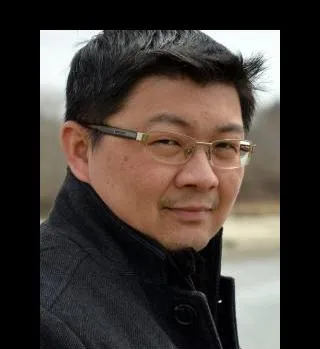
Cheng-Chwee Kuik is a Senior Fellow at the Foreign Policy Institute of the Johns Hopkins University School of Advanced International Studies (SAIS). He is Professor of International Relations at the National University of Malaysia (UKM)’s Institute of Malaysian and International Studies (IKMAS) and concurrently a Nonresident Scholar at Carnegie China. He is Co-Founder of the East Asian International Relations (EAIR) Caucus, a research platform for exchange, engagement, and empowerment among foreign affairs professionals in Malaysia. He served as Head of the Writing Team for the Government of Malaysia’s inaugural Defence White Paper (2019-2020) and a member of the Consultative Council on Foreign Policy, Malaysian Ministry of Foreign Affairs (2023-2024). Previously he was a postdoctoral research associate at the Princeton-Harvard “China and the World” Program (CWP) and a visiting research fellow at the University of Oxford's Department of Politics and International Relations.
Professor Kuik’s research focuses on small-state foreign and defence policies, Asian security, and international relations. Cheng-Chwee’s publications have appeared in such peer-reviewed journals as International Affairs, Pacific Review, Journal of Contemporary China, Chinese Journal of International Politics, Journal of Chinese Political Science, and Contemporary Southeast Asia. He is co-author with David M. Lampton and Selina Ho of Rivers of Iron: Railroads and Chinese Power in Southeast Asia (University of California Press, October 2020), and co-editor with Alice Ba and Sueo Sudo of Institutionalizing East Asia: Mapping and Reconfiguring Regional Cooperation (Routledge 2016). Kuik's essay, “The Essence of Hedging” was awarded the biennial 2009 Michael Leifer Memorial Prize by the Institute of Southeast Asian Studies for best article published in any of the three ISEAS journals.
Kuik is a regular invited speaker to international conferences and closed-door policy roundtables. His current projects include: hedging in international relations, elite legitimation and foreign policy choices, and the host-country agency in connectivity cooperation. Cheng-Chwee serves on the editorial boards/committees of Contemporary Southeast Asia, Australian Journal of International Affairs, Asian Perspective, Asian Politics and Policy, International Journal of Asian Studies, and East Asian Policy. He holds an M.Litt. from the University of St. Andrews and a PhD from Johns Hopkins University.
Photo Credit: https://bookshop.iseas.edu.sg/publication/7997
https://pixabay.com/users/gdj-1086657/