"ASEAN and International Order Transition" - by CWP alum Kai He

This article examines ASEAN’s role in the ongoing transition of regional order amid intensifying US–China rivalry. It argues that both major powers are seeking to court ASEAN as part of their broader contest for leadership in the Indo-Pacific, recognizing that regional followership is essential to sustaining their strategic influence. Drawing on the three-pillar framework of international order, the article contends that ASEAN’s limited military capacity constrains its influence in the power-based pillar. However, ASEAN can still exert meaningful agency through institutional balancing, particularly within the institutional and normative pillars of the regional order. Specifically, ASEAN needs to pursue a strategy of selective engagement, i.e., promoting inclusive institutions, avoiding exclusive ones, and acting as a bridge-builder between competing powers, even as this task becomes increasingly challenging. The article concludes that ASEAN’s greatest test lies in maintaining its internal cohesion and unity. While the United States and China will remain the primary architects of the regional order transition, ASEAN’s role as a stabilizing and mediating force should neither be overlooked nor underestimated.
https://doi.org/10.1142/S3082866X26500016
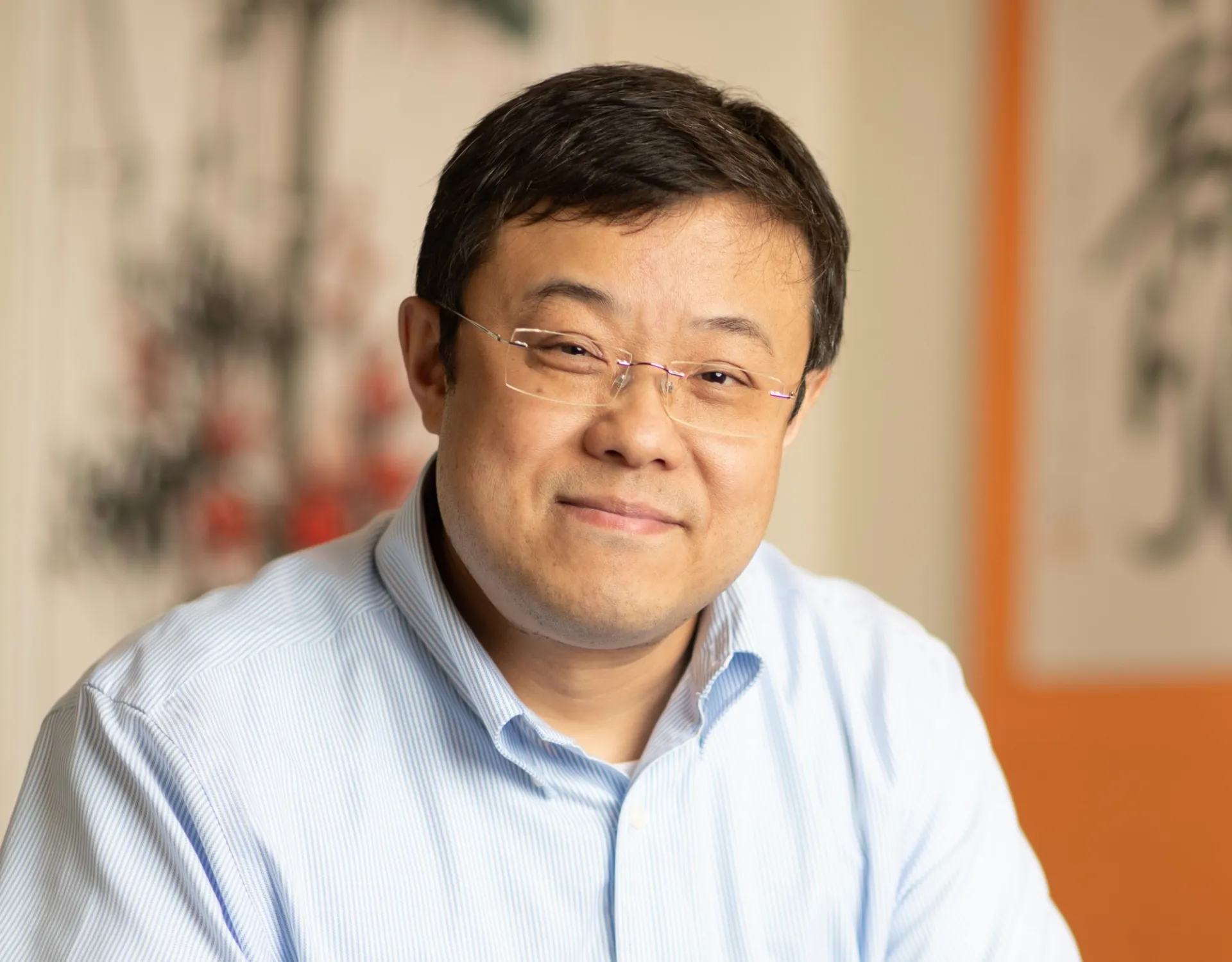
Kai He is Professor of International Relations at the School of Government and International Relations, Griffith University, Australia. He served as a non-resident Senior Scholar at the United States Institute of Peace (2022-2023), an Australian Research Council (ARC) Future Fellow (2017-2020), and a postdoctoral fellow in the Princeton-Harvard China and the World Program (2009-2010). He is a co-editor of “Cambridge Elements in Indo-Pacific Security,” a short-book series published by Cambridge University Press. He has authored or co-authored seven books and edited or co-edited eight volumes. His new books include The Upside of U.S.-Chinese Strategic Competition: Institutional Balancing and Order Transition in the Asia Pacific (co-authored with Huiyun Feng, Cambridge University Press, 2025) and International Organizations and Peaceful Change in World Politics (co-edited with T.V. Paul and Anders Wivel, Cambridge, 2025). He received the 2025 James Rosenau Award from the International Studies Association.
His peer-refereed articles have appeared in European Journal of International Relations, European Political Science Review, International Affairs, International Studies Review, International Politics, Political Science Quarterly, Review of International Studies, Security Studies, Cooperation and Conflict, Contemporary Politics, Ethics & International Affairs, Asian Survey, The Pacific Review, Journal of Contemporary China, The Chinese Journal of International Politics, Asian Security, Asian Perspective, Australian Journal of Political Science, Australian Journal of International Relations, International Relations of the Asia Pacific, Issues and Studies, Strategic Studies Quarterly, East Asia, Asia Policy, Cambridge Review of International Affairs, and Journal of Contemporary East Asian Studies.
He received several internationally competitive fellowships and grants, including the Princeton-Harvard China and the World Program Postdoctoral Fellowship (2009-2010), a Lynde and Harry Bradley Foundation Research Fellowship (2009-2010), an EAI fellowship (2011-2012) from the East Asia Institute in Seoul, an Asia Studies Fellowship (2012) from the East-West Center in Washington D.C., and visiting fellowships (2014/2017) from the S. Rajaratnam School of International Studies, Nanyang Technological University, Singapore, and policy-oriented research grants from the Korea Foundation, South Korea (2016/ 2019). His research projects are funded by the MacArthur Foundation, USA (2016-2018) and the Australian Research Council (2017-2020; 2021-2023).
Photo Credit: https://www.worldscientific.com/doi/10.1142/S3082866X26500016