
"All Dressed Up With Nowhere To Go" - By CWP Alum Ja-Ian Chong
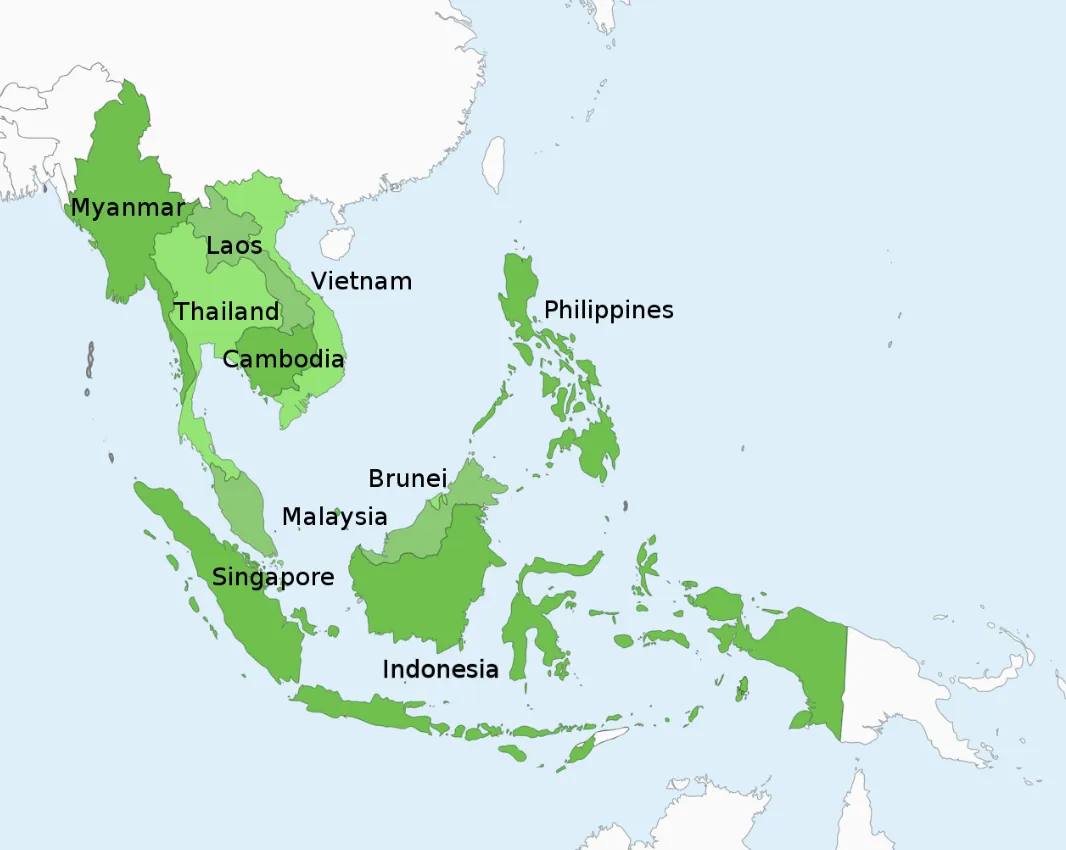
Envisioned in the 1990s as a multilateral means to engage all actors with active security interests in Southeast Asia – including the United States (US) and China – the Association of Southeast Asian Nations (ASEAN) Regional Forum (ARF) now seems very much like an organisation without direction. A range of other organisations and arrangements have taken on key roles originally intended for the ARF. The East Asia Summit (EAS) now seems to be the premier multilateral forum for top leaders to meet over Asia-related matters, while the ASEAN Defence Ministers’ Meeting Plus (ADMM+) appears to make explicit provisions for military confdence-building (ASEAN 2006b, 2007, 2017). Other mini-laterals seem to give states active in the region platforms for interaction over everything from joint naval patrols to non-traditional security issues such as counter-terrorism, human trafcking and humanitarian assistance and disaster relief (HADR) with little to do with the ARF (Chheang 2019; Gulang 2017). Apart from not having much of an efect on regular interaction over security issues among regional states, the ARF also plays a limited role in addressing points of contention and diference in East Asia. At the height of tensions over the South China Sea between 2010 and 2017, virtually no regional actor paid attention to the ARF as a mechanism for confdence-building and preventive diplomacy, much less for an “elaboration of approaches to conficts” (Bureau of Political-Military Afairs 1995, point 6.2). Likewise, when tensions between Cambodia and Thailand over Preah Vihear in 2008 and 2011 resulted in cross- border exchange of fre between troops of the two sides, no party invoked any of the ARF processes (Turcsányi & Kříž 2016; International Crisis Group 2011). The same was true of tensions between Thailand and Myanmar over armed Kachin groups operating across their shared border that resulted in clashes in 2001 (Aglionby 2001; Anonymous 2000). The ARF, therefore, seems to have little or no prominence in actually helping to manage tensions in East Asia despite its lofty goals and regular meetings.
All Dressed Up with Nowhere to Go: THe ASEAN Regional Forum, Major Power Disinterest and the Limits of Multilateral Security Cooperation in East Asia Ja Ian Chong
https://www.routledge.com/Multilateralism-in-Peril-The-Uneasy-Triangle-of-the-US-China-and-the-EU/Wu-Gaenssmantel-Giumelli/p/book/9780367765224
The focus of my teaching and research is on international relations, especially IR theory, security, Chinese foreign policy, and international relations in the Asia-Pacific. Of particular interest to me are issues that stand at the nexus of international and domestic politics, such as influences on nationalism and the consequences of major power competition on the domestic politics of third countries. I also enjoy looking at historical material in my research. In addition to my academic background, I have experience working in think-tanks both in Singapore and in the United States. As such, I also look at the relationship between political science theory and policy, and believe the two can inform each other.
I am author of External Intervention and the Politics of State Formation–China, Indonesia, Thailand, 1893-1952 (Cambridge, 2012), which received the 2013 Best Book Award from the International Security Studies Section of the International Studies Association.
Photo Credit: By File:Asie.svg: historicair 20:31, 20 November 2006 (UTC)derivative work: Hariboneagle927 - This file was derived from: Asie.svg:, Public Domain, https://commons.wikimedia.org/w/index.php?curid=110266257