"18. Securitisation And Governance In The Xi Jinping Era" - By CWP Alum Joel Wuthnow
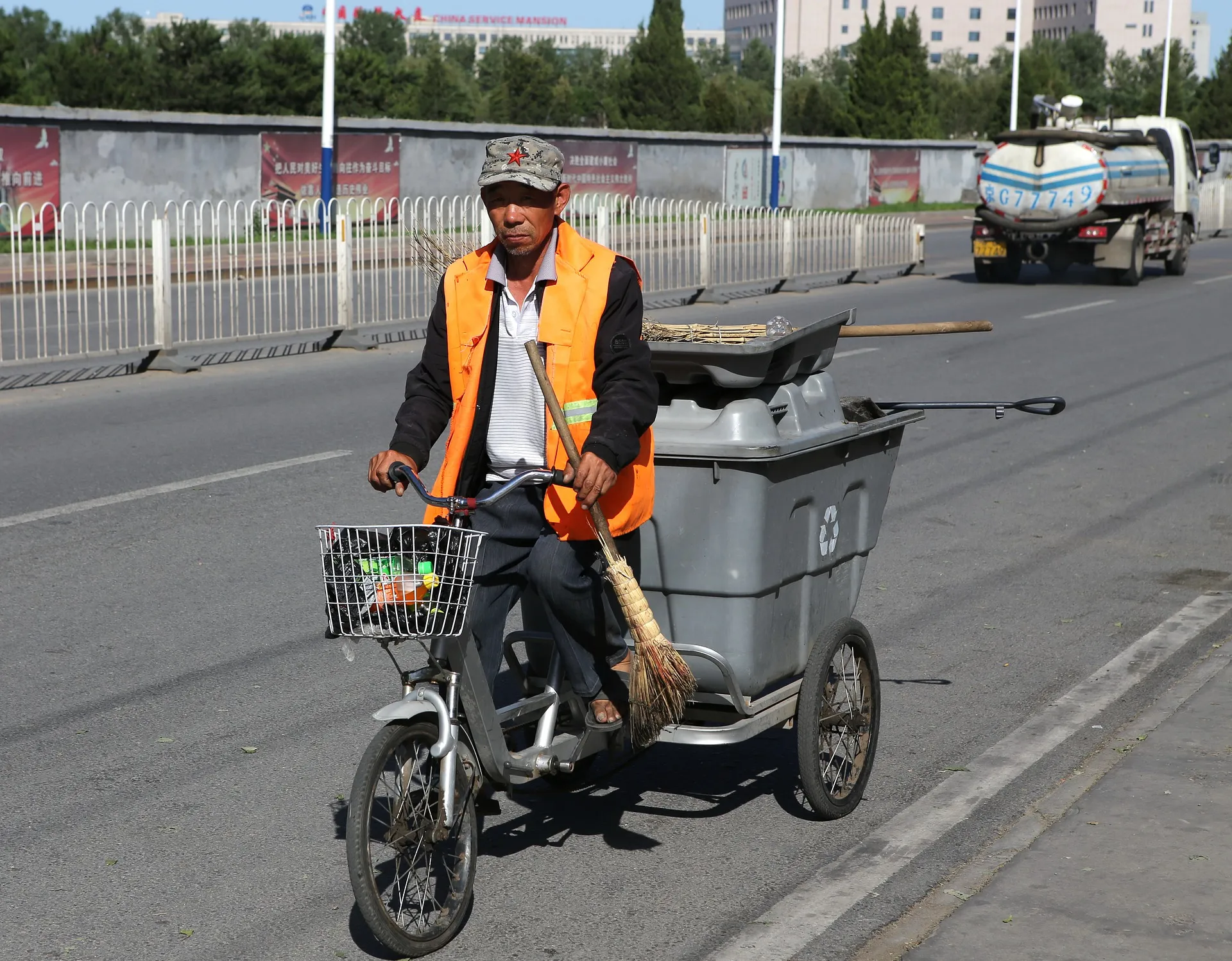
Images of protesters taking to the streets in Shanghai during the 2022 COVID lockdown underscore a contradiction in Chinese governance. On one hand, a powerful security state has been erected during the Xi era, with areas of governance such as public heath securitised, i.e. regarded as national security issues subject to the coercive machinery of the Communist Party of China and the Chinese state (Heath 2015). On the other hand, protests revealed the limits of the Party’s ability to control the narrative and to coordinate effective responses during a crisis. This chapter considers the nature of securitisation during the Xi era, addressing three interrelated questions: how has the concept of security expanded under Xi, how have institutional reforms influenced decision-making and implementation, and what challenges will the Party likely face in sustaining the system after the 20th Party Congress in late 2022? An Expanding Security Concept In April 2014, at the first meeting of the Central National Security Commission (CNSC), Xi introduced an “overall national security concept” in which 11 distinct policy areas were linked to national security (Xinhua 2014). As originally formulated, these included politics, territorial management, the military, economics, culture, social affairs, technology, information, ecology, natural resources and nuclear development. Xi encouraged cadres working in all areas to “be prepared for danger in times of peace” and cultivate a proper “attitude of distress” based on evolving challenges to the regime.
https://epress.nus.edu.sg/cpcfutures/9789811852060-18.pdf - https://epress.nus.edu.sg/cpcfutures/
Dr. Joel Wuthnow is a senior research fellow in the Center for the Study of Chinese Military Affairs within the Institute for National Strategic Studies at NDU. His research areas include Chinese foreign and security policy, Chinese military affairs, U.S.-China relations, and strategic developments in East Asia. In addition to his duties in INSS, he also serves as an adjunct professor in the Edmund A. Walsh School of Foreign Service at Georgetown University.
His recent books and monographs, all from NDU Press, include Crossing the Strait: China's Military Prepares for War with Taiwan (2022, lead editor), The PLA Beyond Borders: Chinese Military Operations in Regional and Global Context (2021, lead editor), System Overload: Can China's Military Be Distracted in a War over Taiwan? (2020), Chairman Xi Remakes the PLA: Assessing Chinese Military Reforms (2019, co-editor), and China's Other Army: The People's Armed Police in an Era of Reform (2019). His research has also appeared in journals such as Asian Perspective, Asia Policy, Asian Security, The China Quarterly, Chinese Journal of International Politics, Joint Force Quarterly, Journal of Contemporary China, Journal of Strategic Studies, and in edited volumes.
Prior to joining NDU, Dr. Wuthnow was a China analyst at CNA, a postdoctoral fellow in the China and the World Program at Princeton University, and a pre-doctoral fellow at The Brookings Institution. His degrees are from Princeton University (A.B., summa cum laude, in Public and International Affairs), Oxford University (M.Phil. in Modern Chinese Studies), and Columbia University (Ph.D. in Political Science). He is proficient in Mandarin.
Photo Credit: https://pixabay.com/users/reijotelaranta-6656376/